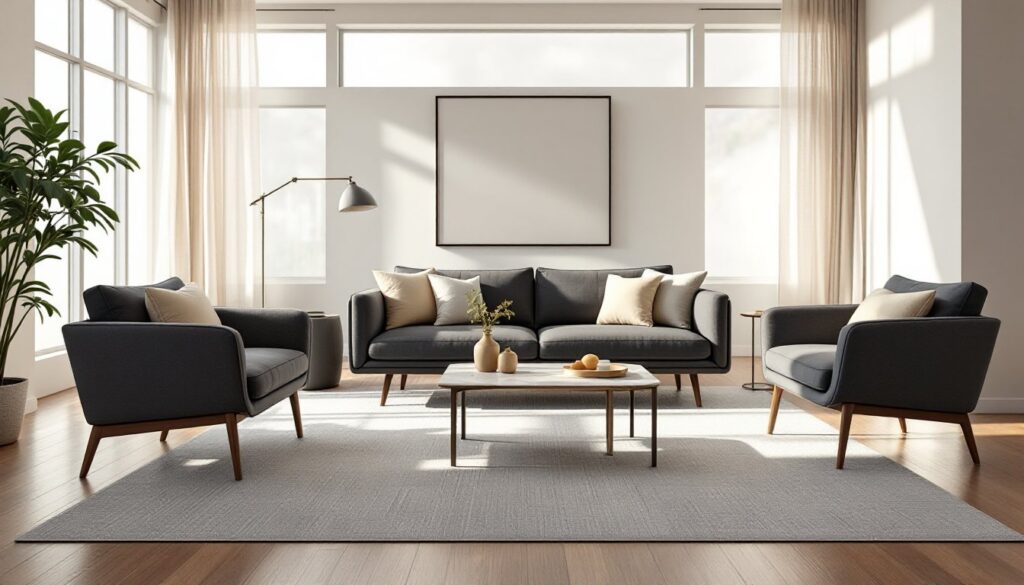
A modern living room rug does more than tie a room together, it anchors your space, defines seating areas, and sets the tone for everything else that follows. Whether you’re starting from scratch or refreshing a tired room, finding the right rug involves real decisions about size, material, color, and placement. This guide walks you through the practical steps to select a modern living room rug that works for your lifestyle, fits your budget, and actually looks like it belongs in your home. No fluff, no trends that’ll feel dated next year, just honest advice based on how rugs perform in real living rooms.
Table of Contents
ToggleKey Takeaways
- A modern living room rug anchors your space and defines seating areas, with success depending on careful decisions about size, material, color, and placement.
- Choose natural fibers like wool for durability and luxury, synthetic blends for practicality with pets or children, or wool-synthetic blends as a balanced middle ground.
- Measure your space carefully and use either the anchor method (furniture legs on the rug) or floating method (rug under coffee table) to ensure the modern living room rug feels balanced and intentional.
- Quality doesn’t require a five-figure budget: mid-range wool-synthetic blends ($600–$1,500 for 8×10) offer solid durability, while quality synthetics work excellently for $300–$800.
- Maintain your rug with weekly vacuuming, immediate spill response, professional cleaning every 12–18 months, and rotation every 3–6 months to keep it looking new for decades.
- Layer rugs and use rug pads to add depth and prevent sliding, while considering placement options like diagonal orientation or positioning in front of focal points to maximize visual impact.
Understanding Modern Rug Styles And Materials
Modern rugs lean toward clean lines, neutral or bold solid colors, geometric patterns, and natural fibers paired with synthetics. The aesthetic avoids ornate florals or heavy traditional designs, instead favoring simplicity and texture. Materials matter enormously for durability and feel underfoot.
Natural fibers like wool, jute, and sisal offer excellent durability and warmth but can absorb stains more readily. Wool is the gold standard, it’s naturally stain-resistant, feels luxurious, and lasts decades if maintained. Jute and sisal bring texture but are rougher underfoot and better suited to low-traffic zones or as layering pieces.
Synthetic fibers like polypropylene and polyester resist stains and moisture, making them practical for households with pets or children. They’re also budget-friendly and come in endless colors. The tradeoff: they don’t age as gracefully as natural fibers and may show matting over time.
Blends, wool mixed with synthetic fibers, hit the middle ground, offering durability, stain resistance, and a better feel than pure synthetics at a moderate price point.
Contemporary Patterns And Color Palettes
Modern living room design gravitates toward monochromatic schemes, muted earth tones, soft grays, and carefully chosen accent colors. Geometric patterns, stripes, chevrons, abstract shapes, work well if they’re clean and uncluttered.
Solid rugs in charcoal, cream, or soft taupe work as anchors: patterned rugs add visual interest without overwhelming the room. Light colors open up tight spaces but demand more frequent cleaning. Dark colors hide wear and footprints but can feel heavy in small rooms. Consider the room’s existing wall color, furniture, and how much foot traffic the rug will receive. Many designers recommend starting with a neutral base and using accent colors through pillows or wall art instead, easier to refresh without replacing the rug.
Measuring Your Space And Selecting The Right Size
This is where most people slip up. A rug that’s too small makes the room feel choppy: one that’s too large overwhelms the space. Measure your living room length and width, then sketch the furniture layout to scale on paper.
Standard rug sizes come in increments: 3×5, 5×7, 5×8, 6×9, 8×10, 9×12, and larger custom dimensions. Nominal measurements are close to actual, a “5×7″ rug measures approximately 4’11” × 6’10”.
For furniture placement, you have two main approaches:
-
The anchor method: The front legs of your sofa and chairs sit on the rug. This works best with larger rugs (8×10 or bigger) and visually ties seating into one cohesive zone. It feels intentional and grounded.
-
The floating method: The rug sits under the coffee table and partially beneath the front legs of furniture, with perimeter space showing around edges. This suits smaller spaces or when you want to showcase hardwood flooring. A 5×7 or 5×8 works well here.
Pull out a tape measure and mock up the furniture’s footprint on your floor using painter’s tape. Place a rug sample or cardboard cutout in the space. Does it feel balanced? If the rug is too small, feet will dangle off edges: if too large, it’ll crowd walkways. Allow 18 to 24 inches of bare floor around the rug’s perimeter for visual breathing room. In hallways or transitional spaces, aim for at least one-third of furniture legs on the rug.
Budget-Friendly Options Without Sacrificing Quality
A quality modern living room rug doesn’t require a five-figure budget. The trick is understanding where to invest and where corners can be cut responsibly.
Premium wool rugs run $1,500–$4,000+ for an 8×10, but they last 15–20 years with proper care. If you plan to keep a rug for over a decade, spending on wool makes financial sense. Mid-range wool-synthetic blends land around $600–$1,500 and offer solid durability with less sticker shock.
Quality synthetics from reputable manufacturers, brands known for tight pile construction, cost $300–$800 and work excellently for families with pets or children. Look for rugs with 8-point twist or loop pile, which resists crushing and shows wear less readily than cheap shag.
Budget-conscious sources: Online retailers often undercut brick-and-mortar pricing by 20–40%. Outlet sales and floor samples offer steeper discounts. Don’t dismiss vintage or secondhand wool rugs, estate sales frequently yield well-made mid-century rugs at a fraction of retail.
When shopping, check the rug backing (latex or felt is better than paper), the density (heavier is generally better), and pile height (modern aesthetics favor lower, tighter piles of 0.5–0.75 inches). Request a sample swatch if buying online: actual color and texture can surprise in person. Factor in shipping costs and potential delivery delays, rugs from overseas can take 6–12 weeks.
Placement And Layering Techniques For Impact
Placement goes beyond centering the rug. Think about flow, focal points, and how the rug interacts with your seating.
Under a sofa and coffee table is the classic approach, it visually anchors the main seating zone and prevents the room from fragmenting. Ensure the coffee table sits fully on the rug: it looks sloppy when only half is supported.
In front of a focal point like a fireplace or media console creates a subtle directional pull toward that wall. This works well in rooms where the rug’s size doesn’t accommodate a full furniture grouping on it.
Diagonal placement (rotating the rug 45 degrees) can visually enlarge a tight space and adds contemporary interest. This requires more floor space and careful furniture arrangement but feels intentional in modern interiors.
Layering two rugs adds depth and luxury without major expense. Pair a larger neutral base rug with a smaller patterned or textured rug layered on top, popular in modern design. The top rug should be one-third to half the size of the base. Make sure both rugs lie flat: use a non-slip rug pad underneath to prevent sliding and protect flooring.
Rug pads are non-negotiable. They prevent the rug from sliding on hardwood or tile, protect the subfloor from moisture and staining, and extend the rug’s life by reducing friction and shifting. High-quality felt or non-slip rubber pads cost $20–$100 depending on size and quality, a worthwhile investment. Apply the pad to the bottom of the rug or the floor: some people do both for maximum grip.
Maintenance And Care For Long-Lasting Beauty
A $1,000 rug will look like a $500 rug in two years if you skip maintenance. Modern rugs, especially those with light colors or fine fibers, demand routine care.
Weekly vacuuming with a suction-only (not beater bar) mechanism keeps dust from embedding in fibers. Beater bars can damage pile, especially on delicate materials. Most robotic vacuums work fine on low-to-medium pile rugs, just remove the rug pad weekly to let air circulate underneath.
Immediate spill response prevents stains from setting. Blot (don’t rub) liquid spills with a clean cloth, working from the outer edge inward to prevent spreading. For dried spills, use a stiff brush or vacuum to remove loose debris, then apply a cleaner formulated for your rug’s fiber type. Test any cleaner on an inconspicuous corner first.
Spot cleaning with a commercial rug shampoo or diluted white vinegar and water (1:3 ratio) works for light stains. Spray lightly, let sit for 5–10 minutes, then blot with a damp cloth and allow to air dry completely. Never oversaturate, excess moisture can damage the backing and create mildew.
Professional cleaning every 12–18 months extends rug life significantly. Steam cleaning or dry extraction by certified professionals removes ground-in dirt that vacuuming can’t reach. Cost runs $150–$400 for a standard 8×10, depending on material and condition.
Rotation every 3–6 months distributes wear evenly and prevents heavy traffic areas from matting prematurely. Reverse the rug’s direction with each rotation.
Sun exposure fades colors over time. Use window treatments or rotate the rug’s placement if a bright window beats on it daily. UV-protective window film is another option for valuable pieces.
Conclusion
Choosing a modern living room rug boils down to honest assessment: What’s your traffic level? What’s your cleaning tolerance? How long do you plan to keep it? A well-selected rug anchors your entire room, improves comfort underfoot, and can last decades if you match material to lifestyle and maintain it properly. Start by measuring twice and sketching your layout. Factor in both initial cost and long-term care demands. Whether you go premium wool or practical synthetic, the rug you choose should feel right when you step on it and fit naturally into your life, not just Instagram.