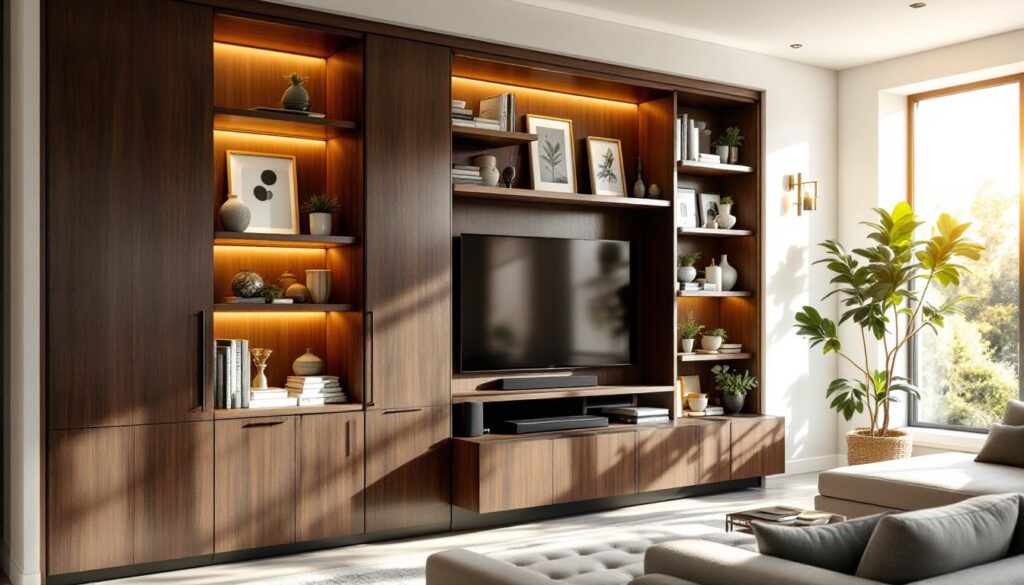
Living room cabinets are no longer just functional storage, they’re design statements that anchor your space. Whether you’re working with a sprawling open-concept layout or a compact urban apartment, the right cabinet solution brings order, style, and personality to your living area. From sleek floating designs to statement-making dark wood pieces, 2026’s cabinet trends prioritize both beauty and practicality. This guide walks you through 10 stylish options that solve real storage challenges while fitting modern, transitional, or classic aesthetics. Let’s explore cabinet ideas that work for your space.
Table of Contents
ToggleKey Takeaways
- Living room cabinet ideas blend storage functionality with design aesthetics, offering solutions from floating minimalist pieces to dark wood statement cabinets that anchor your space.
- Floating wall cabinets require proper stud anchoring with lag bolts spaced 16 inches apart and should be installed 18–24 inches above eye level for both safety and visual breathing room.
- Corner cabinets and built-in solutions maximize wasted space in living rooms, with options ranging from L-shaped wraps to rotating lazy Susan designs depending on your room’s layout and renovation commitment.
- Open shelving cabinets showcase decor and books beautifully but demand styling discipline, dust management, and support brackets every 16–24 inches to prevent sagging under weight.
- Dark wood cabinets provide timeless elegance and work across multiple design styles, but require proper positioning in smaller rooms and quality finishes resistant to UV fading when exposed to sunlight.
- Media consoles and storage benches serve multiple functions by combining seating, TV mounting, and hidden storage while requiring careful attention to thermal clearance, weight capacity, and cable management before installation.
Floating Wall Cabinets for Modern Minimalism
Floating cabinets mount directly to wall studs, creating a clean, open feel that modern minimalists love. Unlike traditional base cabinets that sit on the floor, floaters expose the floor beneath, making small rooms feel bigger and easier to clean.
Why they work: Wall-mounted cabinets free up visual space, reduce floor clutter, and adapt to any living room size. Pair them with a light oak, matte white, or bleached finish for that contemporary vibe. Dark floating cabinets work just as well if you’re leaning into moody, sophisticated styles.
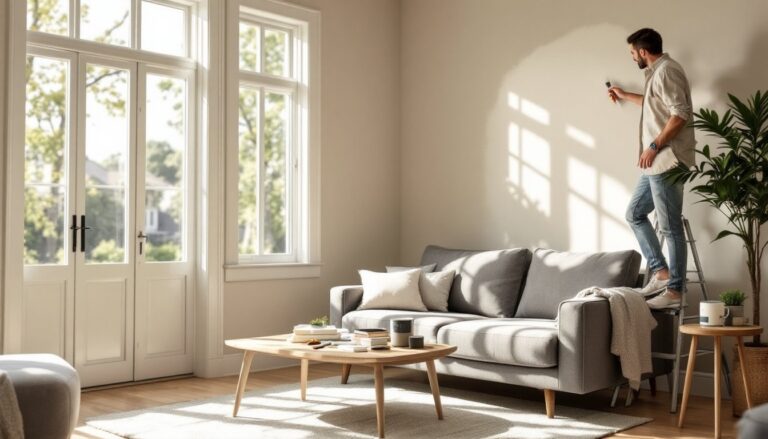
Installation reality check: Floating cabinets require solid wall anchoring into studs, don’t skimp on hardware. Use lag bolts (⅜ inch or larger) spaced 16 inches apart, the standard stud spacing in most homes. If your studs don’t align with where you want the cabinet, you’ll need a French cleat system or steel bracket reinforcement. This isn’t a plug-and-play install: plan on half a day and a level, stud finder, and drill with a ¼-inch bit.
Pro move: Install floating cabinets 18–24 inches above eye level to avoid bumping your head and to create visual breathing room. Pair them with wall lights for living rooms to highlight shelving and create ambiance in the evening.
Built-In Corner Cabinets to Maximize Unused Space
Corner real estate in living rooms often goes to waste, a dead zone where furniture angles awkwardly and dust gathers. Built-in corner cabinets transform this wasted space into functional display and storage.
The layout advantage: Corner cabinets come in two styles: L-shaped units that wrap around the corner, and lazy Susan turntables inside a corner frame that rotate for access. An L-shaped built-in typically costs more and requires carpentry, but it maximizes linear storage. A simpler cabinet with a rotating shelf gives you better access without the custom build.
Material choices: Recessed corner cabinets work well in compact rooms where protruding furniture blocks flow. Surface-mounted corner units are easier to retrofit and cost less, making them ideal if you’re renting or want flexibility.
Designing for Awkward Corners and Angles
Not all corners are 90 degrees. Older homes sometimes have splayed or uneven walls. Measure the corner depth at three heights, top, middle, bottom, and note any gaps. A scribe (a flat board cut to the wall’s profile) hides gaps between the cabinet and wall, creating a seamless look. If the angle is severe, consider space-saving solutions that angle inward rather than forcing a square cabinet into a sloped space.
For angled corners, the cabinet’s face frame, the wooden structure around the door, must run parallel to your wall, not the corner angle. This requires a custom or semi-custom cabinet, not an off-the-shelf unit. Pre-made corner cabinets rarely accommodate walls outside the 85–95-degree range, so measure and ask your cabinet supplier about customization costs upfront.
Open Shelving Cabinets for Contemporary Display
Open shelving strips away cabinet doors, trading concealment for visual appeal. Perfect for displaying books, art, plants, and decor, open shelves define contemporary and industrial aesthetics. Unlike floating cabinets, open shelves sit on brackets without a solid back, keeping walls visible and rooms airy.
Why they shine: Open shelving works best in rooms with good natural light and intentional decor. It encourages curation, you’re displaying items, not hiding junk. Pair open shelves with living room paint colors like soft whites, warm grays, or sage greens to keep backgrounds neutral and let your displayed items stand out.
Practical concerns: Open shelves collect dust and require styling discipline. Books and decor sit exposed, so arrangement matters more than with closed cabinets. Plan for deeper shelves (10–12 inches) to accommodate books without them tipping. Support brackets every 16–24 inches prevent sagging, especially for heavier items like book collections.
Material & finish: Solid wood shelves (pine, oak, walnut) handle weight better than particleboard. Walnut or blackened steel brackets create industrial touches. White or light oak shelves maintain minimalism. Arrange items in odd numbers and vary heights to avoid a cluttered look, this is where the design magic happens and where interior ideas about balance really show through.
Dark Wood Cabinets for Timeless Elegance
Dark wood never goes out of style. Walnut, espresso stain, and rich mahogany cabinets add gravitas, warmth, and a curated feel to living rooms. Unlike trendy finishes, dark wood cabinets age gracefully and suit transitional, traditional, and contemporary interiors alike.
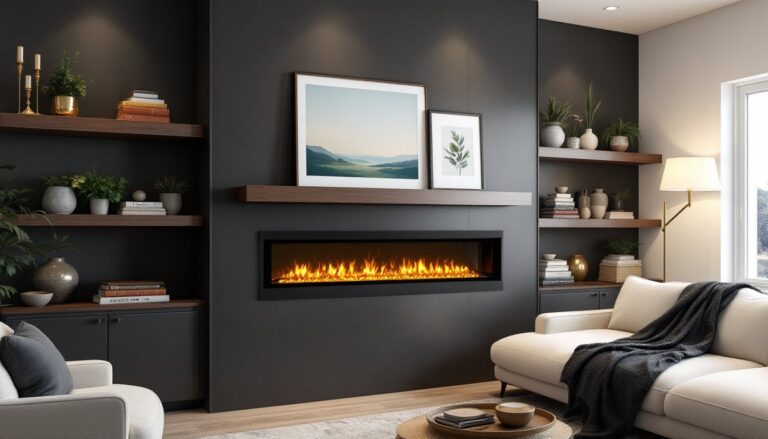
Why the appeal: Dark cabinets create focal points and anchor large open spaces. They contrast beautifully with light walls and draw the eye. In smaller rooms, position dark cabinets on one wall to avoid making the space feel cave-like, pair them with lighter furnishings and walls to balance the visual weight.
Finish quality matters: Solid hardwood with hand-applied stains and varnish runs $2,000–$5,000+ for a wall-length cabinet unit. Veneer over plywood costs less ($800–$2,000) but requires careful edge-banding to hide the plywood edge. Avoid cheap laminate finishes that peel within a few years. Ask your supplier about UV-resistance in the finish, dark woods fade over time if exposed to direct sunlight.
Styling approach: Dark wood cabinets need breathing room. Pair them with brass or brushed nickel hardware, not chrome (which feels cold against warm wood). Add warm lighting, soft LED strips or accent lamps, to bring out the grain and richness. Combine dark cabinets with pictures of electric fireplaces in living rooms or artwork to create a curated, intentional look that reads as designer-quality.
Multi-Functional Storage Benches and Media Consoles
A storage bench with cabinet space underneath merges seating, storage, and TV mounting into one piece. Media consoles, cabinets designed to hold a TV and equipment, are the centerpiece of most living rooms and deserve thoughtful selection.
Storage bench advantages: Use a bench with interior storage to hide blankets, board games, seasonal decor, or tech cables. Position it at the foot of a sofa or under a window. Benches support weight (up to 500 lbs. on quality units) while sitting seamlessly in the room’s flow. A plywood-box bench with interior shelves and a padded top runs $300–$800 DIY or $600–$1,500 store-bought. It takes a handy person an afternoon to build from plans: it takes a beginner a weekend.
Media console essentials: A console must account for thermal clearance around electronics, manufacturers typically require 4–6 inches of ventilation on the sides and back. Drill cable-management holes before installation to hide cords. Standard TV stands accommodate 50–70 inch TVs: check your TV’s weight and VESA mounting pattern (the distance between wall-mount holes) before buying. A console with adjustable shelves adapts as your equipment evolves.
Material choices: Solid wood consoles are pricier but last decades. Engineered wood (plywood or MDF core with veneer) is more affordable and lighter to move. Metal frames with wood or glass shelves suit industrial or contemporary styles. Cottage style living rooms pair beautifully with distressed wood consoles, while smart living room ideas often feature consoles with built-in cable management and power outlets. Measure your TV, receiver, speakers, and soundbar before finalizing dimensions, an oversized console looks clunky: an undersized one won’t hold equipment.
Conclusion
Living room cabinets solve real storage challenges while setting the room’s visual tone. Whether you choose floating minimalism, dark wood elegance, or practical media storage, the best cabinet reflects how you actually live and spend time in the space. Prioritize installation quality and materials, these aren’t replacements every few years. Measure twice, account for wall quirks, and don’t rush prep work. The cabinet you install today should serve you for a decade. Combined with thoughtful lighting, color, and layout, the right cabinet transforms a living room from functional to genuinely designed.