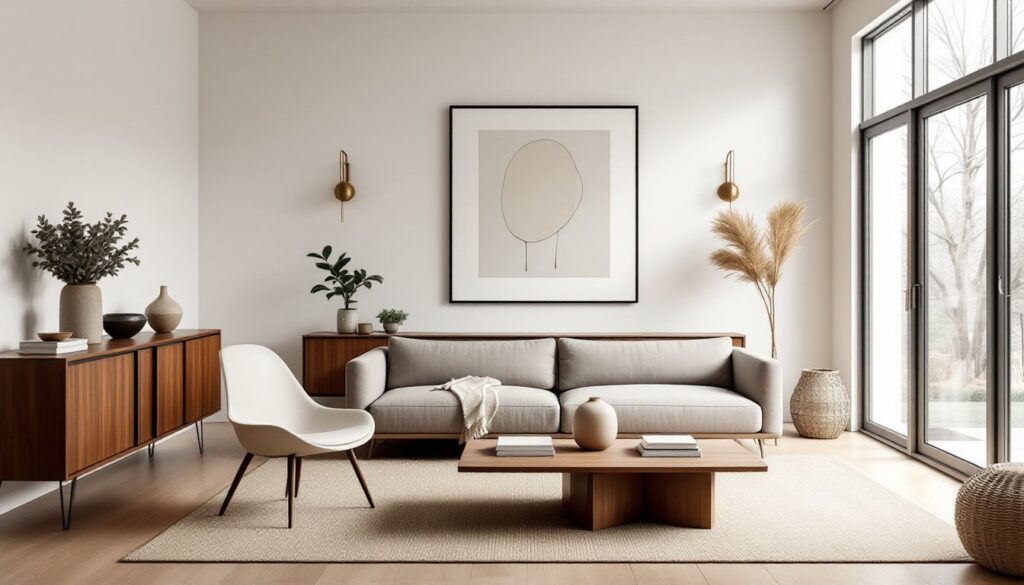
<a href="https://www.domino.com/design-by-room/minimalist-living-room-ideas/” target=”_blank” rel=”noopener nofollow”>Minimalist mid century modern design sits at an interesting intersection: it celebrates the clean geometry and functional beauty of mid-century aesthetics while stripping away unnecessary ornamentation. This combination creates living rooms that feel both curated and livable, sophisticated without pretension. Homeowners drawn to this style appreciate that it doesn’t demand perfection or constant decoration. Instead, it rewards thoughtful selection and intentional space planning. Whether you’re starting fresh or refining an existing room, understanding how to balance retro warmth with minimalist restraint will transform your living space into a gathering spot that’s genuinely inviting.
Table of Contents
ToggleKey Takeaways
- Minimalist mid century modern living room design combines clean geometric lines and functional aesthetics with intentional restraint, avoiding unnecessary ornamentation and surface clutter.
- Choose a quality sofa with mid-century proportions (36–40 inches seat depth, 72–84 inches wide) in neutral tones and exposed wood legs, paired with just one accent chair for a curated look.
- Use negative space and one sculptural focal point—whether a statement sofa, iconic chairs, or standout coffee table—to let pieces breathe rather than filling every surface.
- Anchor your palette with two or three neutral tones (warm white, soft gray, pale taupe) and honest materials like walnut, teak, natural leather, and wool that age gracefully over time.
- Limit accessories to one meaningful art piece, a geometric rug, a ceramic vase, or minimal throw pillows; every object must justify its presence in the space.
- Incorporate restrained lighting with simple flush-mount fixtures, mid-century sconces, or clean-lined arc lamps that prioritize function over decorative details.
Understanding Minimalist Mid Century Modern Design
Mid-century modern emerged in the 1940s–1960s as a reaction against ornate Victorian and Art Deco styles. Designers prioritized function, clean lines, and the honest use of materials. Minimalism, by contrast, is about reduction, keeping only what serves a purpose or brings genuine joy. Together, they create a design philosophy where every object earns its place.
Minimalist mid century modern spaces rely on negative space (the absence of objects) to let standout pieces breathe. A single sculptural sofa, a pair of iconic wood chairs, or one well-scaled coffee table becomes the focal point. The room itself, the wall color, natural light, and proportions, becomes part of the design.
This style avoids maximalism’s instinct to fill every surface. Shelves remain mostly open, walls are calm, and color is restrained. The warmth comes from wood tones, natural fabrics (leather, wool, linen), and the character of individual pieces rather than layered accessories. Understanding this balance is the foundation for pulling off the look successfully.
Essential Furniture Pieces for a Minimalist Mid Century Living Room
Statement Seating and Low-Profile Sofas
Your sofa anchors the entire room, so it should reflect mid-century proportions: typically 36–40 inches deep (seat depth, not overall), 72–84 inches wide, and with clean, tapered legs that expose floor. Avoid deep sectionals or oversized recliners: they contradict the style’s geometry.
Look for sofas with exposed wood frames in walnut, teak, or oak, upholstered in wool, linen, or high-quality leather. A neutral color, charcoal gray, warm taupe, or cream, works best. Iconic silhouettes like the Florence Knoll, Eames sofa, or less expensive interpretations from contemporary furniture makers capture the aesthetic without requiring a secondary mortgage.
Pair the sofa with a single accent chair rather than a matching pair. A molded plastic shell chair (Eames-style), a low-slung lounge chair, or a compact wingback in a complementary tone adds visual interest without clutter. Keep seating minimal: sofa plus one accent chair is often enough for a minimalist approach.
Functional Coffee Tables and Storage Solutions
The coffee table should be proportional and sculptural, a stand-alone piece that could be art. Mid-century classics feature tapered wood legs, geometric forms, and minimal ornamentation. Look for rectangular tables in walnut with oak accents or walnut with marble or ceramic tops (a nod to post-war European design). The surface should be large enough to hold a small stack of books or a single decorative object, but not a catch-all for remotes, magazines, and clutter.
Storage in a minimalist mid century room hides functional mess. A low credenza (a horizontal cabinet, typically 48–60 inches wide and 16–18 inches deep) is ideal. Choose styles with sliding doors, hairpin legs, or tapered wooden legs, and keep surfaces clear. A media console plays the same role if your room centers on a television. Tall shelving units with open shelves work in larger rooms, but every shelf must be curated, no double-stacking or overflow.
Furniture placement matters: float the sofa in the room rather than pushing it to the wall. This creates a sense of deliberate space planning and makes the room feel larger, not smaller.
Color Palettes and Materials That Define the Style
Minimalist mid century palettes are restrained, anchored by two or three neutral tones. The dominant wall color is usually warm white, soft gray, or pale taupe. These neutrals provide a clean backdrop without feeling cold.
Wood species define warmth and character in this style. Walnut (rich, dark brown) and teak (golden brown with grain) are quintessential mid-century woods. Oak, in lighter or medium tones, also works. Avoid mixing more than two wood species: stick with one primary wood for major pieces and perhaps one accent tone. The goal is cohesion, not variety for its own sake.
Accent colors are minimal and intentional. A single accent hue, mustard yellow, sage green, burnt orange, or deep teal, might appear in a single pillow, a throw, or an art piece. Even then, use it sparingly. Most minimalist mid century rooms rely on the wood itself to provide visual warmth rather than bright accents.
Materials in minimalist mid century design are honest. Exposed wood, genuine leather, wool, linen, and metal (usually brushed stainless steel or painted/powder-coated finishes) are preferred. Avoid plastic upholstery, laminate, or heavy fabrics like velvet or faux leather unless they’re used as a deliberate, singular statement. Natural materials age gracefully and reinforce the idea that your furniture is built to last, a core mid-century principle.
Lighting and Decor Accessories to Complete the Look
Lighting shapes the mood of a minimalist mid century room. Overhead fixtures should be restrained: a simple flush-mount, a modest pendant, or a geometric chandelier in matte or brushed metal. Avoid crystal, glass shades with ornate details, or anything too decorative.
Wall lights for living rooms add functional lighting without taking up floor space. Look for mid-century-appropriate sconces with simple metal arms, possibly with cylindrical or minimal ceramic shades. They’re especially useful flanking a sofa or console.
Floor lamps should have clean silhouettes: tripod legs, arc lamps with matte finishes, or pole lamps in black or brass. The Arco lamp (a cantilevered arc reaching over seating) is iconic but pricey: numerous mid-century reproductions exist at lower price points. A simple swing-arm wall lamp mounted above a reading chair also fits the aesthetic.
Accessories in a minimalist room must justify their presence. One large abstract art print, a small wooden sculpture, or a ceramic vase in a neutral tone can define a wall or shelf. Avoid grouping multiple small decor items or artwork. Living room paint colors and wall decor should work as a cohesive unit, a calm, gallery-like effect rather than a crowded salon wall.
Consider incorporating a quality living room rug in a natural fiber, jute, sisal, or wool, in a neutral shade, or choose one with a geometric pattern that echoes mid-century design. Keep it simple: one statement rug defines the seating area without overwhelming the space. Books (stacked spine-out on the credenza, not filling every shelf) and one or two carefully chosen throw pillows complete the look. That’s genuinely enough.
Conclusion
Creating a minimalist mid century modern living room means resisting the urge to fill space and instead trusting the beauty of what you select. Every furniture piece, every color choice, every accent should have a reason for being there. The result is a room that feels both timeless and immediate, a space where thoughtful design and honest craftsmanship create an environment worth living in. Start with a quality sofa and one strong accent piece, let them anchor your room, and build from there. You’ll find that less truly becomes more.